
Lowell City Directory Shelves and Runs
Lowell has an unusually deep directory record. Early Lowell volumes begin in 1832, with selected issues through the nineteenth century, and later Lowell runs are held in more than one Lowell collection. The best collection for Lowell research depends on the year. Pollard Memorial Library, the Center for Lowell History, the National Park Service library, the State Library, and selected digitized Lowell scans overlap without forming one unbroken sequence. Compare a physical or scanned title page before calling a volume Polk, because the Lowell holding descriptions do not establish one publisher for every year.
| Lowell directory source | Lowell years represented | Collection custody | Lowell access route |
|---|---|---|---|
| Early Lowell directories | 1832-1841 selected, then selected years through 1899 | State Library; Pollard and Center for Lowell History | Physical and selected digital research |
| Later Lowell directory runs | State Library selected 1886-1982; NPS selected 1892-1987 | Pollard, NPS Park Library, State Library | Consult the volume or arrange an appointment |
| Digitized Lowell set | Selected years from 1886 through 1985 | Internet Archive links through genealogy catalogs | Searchable scans, with volume-by-volume gaps |
| Lowell street listings | From 1917 | Pollard and Center for Lowell History | Browse Lowell addresses and nearby entries |
Gaps matter. A Lowell surname missing in a year can reflect an irregular run, a Lowell spelling change, marriage, relocation, or an editorial choice. Lowell city directories work best as a sequence of dated Lowell snapshots, not as proof that every person appeared every year.
The digitized Lowell set includes selected volumes for 1886, 1894, 1900, 1906, 1916, 1926, 1931, 1936, 1946, 1950, 1956, 1966, 1975, and 1985. Those scans are a useful at-home Lowell access route, but Pollard’s physical or microfilm copies, the appointment-only NPS collection, and the State Library holdings remain the fallback chain for Lowell research when a year is missing, a scan is poor, or a Lowell street section is needed. Ask a Lowell librarian or archivist for the exact volume and preferred access method before making a special trip.
Lowell’s 1832 City Directory Beginning
The Lowell directory spine starts four years before Lowell became a city in 1836. Early Lowell issues are selected rather than perfectly annual, but they are a strong way to place a person in Lowell’s mill-era city. The local Lowell record changes in 1917, when street listings begin. That turning point matters because an earlier Lowell volume is mainly a name-first tool, while a later one can be read from a Lowell address toward the people recorded there.
- Start with the closest available year for the Lowell family event or address change.
- Check at least two earlier and two later Lowell volumes before drawing a conclusion from a missing name.
- For 1917 and later, turn to the Lowell street section after finding an alphabetical entry.
- Keep the old Lowell street spelling and neighborhood label with each note.
Lowell grew from East Chelmsford, absorbed Pawtucketville in 1874, and had a Wigginville-area change in 1905. A Lowell directory, Lowell deed, or Lowell census may therefore describe the same area under different municipal wording. Note: A Lowell city label is a dated research clue, not a substitute for checking the volume’s year and address.
Pollard’s Lowell City Directory Desk
Pollard Memorial Library’s Local History resources connect Lowell directory research with Lowell Sun microfilm, Lowell historical newspapers, 1879 and 1906 atlases, yearbooks, and links to the Center for Lowell History. Pollard is at 401 Merrimack Street and offers Lowell reference help, written requests, and a local-history route for Lowell research when a scan does not settle a Lowell spelling or address. Its four microfiche readers and computer-attached microfilm reader can provide printed or saved copies for careful comparison.
Pollard’s genealogy resources also list in-library access to Ancestry Library Edition, American Ancestors, and FamilySearch Affiliate materials. Availability changes, and the library says several databases were discontinued after IMLS funding cuts, so Lowell researchers should confirm access before relying on a remote session. Pair a Lowell city directory entry with a Lowell Sun notice or yearbook when two people share a Lowell surname and address.
The Pollard local-history page shows the Lowell research route into newspapers, atlases, and yearbooks.
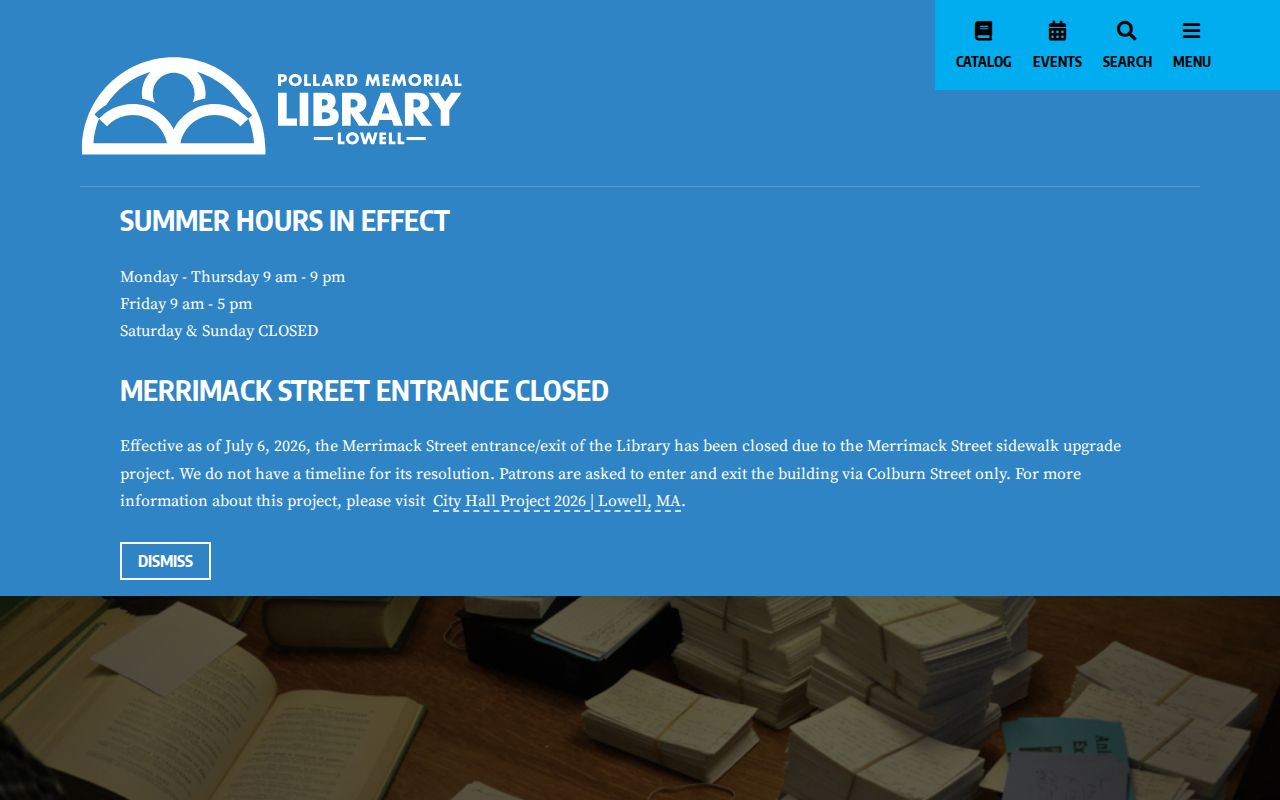
Those companion sources help test whether a Lowell city directory address fits the right Lowell household and period.
The 1917 Lowell City Directory Shift
Street listings from 1917 create an address-first layer for Lowell city directories. Find the exact Lowell historic street name and number, then read nearby Lowell numbers instead of stopping at one entry. The Lowell house-history method directs researchers to physical or microfilm early Lowell directories, street listings, newspapers, Cultural Resource Inventories, Neighborhood Surveys, MACRIS, and Lowell GIS. This is a Lowell historical address trail, not a current occupant list.
The Lowell National Historical Park Library is another offline Lowell route. Its nearly 3,000-item noncirculating collection includes selected Lowell directories from 1892 through 1987, along with Lowell phone books, tax lists, Lowell city documents, and newspaper clippings. Lowell research visits are by appointment at 67 Kirk Street.
The NPS library page identifies its appointment-based directory collection.
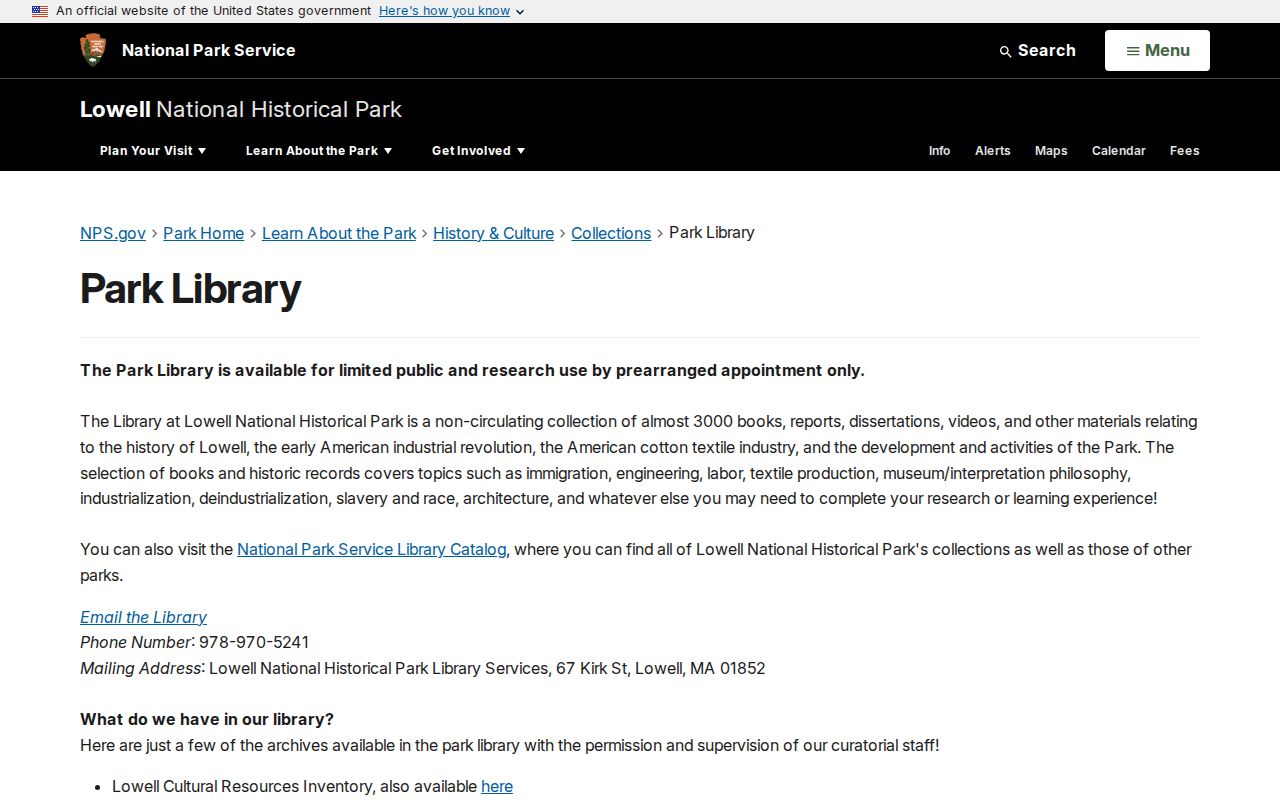
An appointment gives a practical Lowell fallback when an online catalog has a year but not the scanned page needed for a Lowell name or street check.
Decoding a Lowell City Directory Entry
Read the introductory abbreviation page before treating a mark as a fact. The local collection descriptions support common fields such as surname and given name, residence address, occupation, an employer or business address, spouse or household relation in some years, and a widow notation. A volume may also use householder or owner-renter marks, but their meaning is volume-specific. An entry names what the editor printed for that year; it does not independently prove every person in a household.
| Name | Record the spelling exactly, including initials and alternate forms. |
|---|---|
| Residence | Save the number, street, and neighborhood wording used by that volume. |
| Relation or widow note | A parenthetical relationship can help separate people with the same name. |
| Occupation or firm | Use it as a historical identity clue and compare it with the date. |
| Street entry | From 1917, check the address-order listing for nearby recorded households. |
- Criss-cross directory
- The address-order part of a directory, used to move from a street and number toward recorded occupants.
- Householder index
- An index arranged around the person or household named by the publication, not necessarily every occupant.
- Abbreviation key
- The volume’s own guide to its shorthand. Photograph or transcribe it before decoding entry marks.
Lowell City Directories and Name Variants
Lowell’s industrial and immigration history makes name variants normal research, not a sign that a record is wrong. Pollard holds French-language L’Etoile, the New England Greek Messenger, and parish or community material. A surname may appear with an accent removed, an English rendering, a translated given name, or an abbreviated first name. Search each reasonable variant and retain the spelling printed in the source.
Early directories can also omit people. The 1836 Female Directory is a notable exception to a pattern that may leave single women or mill workers out of early alphabetical lists. Absence from one Lowell city directory should prompt a check of the next volume, a newspaper, a church collection, or a census, rather than a firm conclusion about the person.
A Missing Lowell City Directory Name
A missing name is a research warning, not a final answer. Directories have publication gaps, limited runs, spelling choices, and year-specific editorial rules. A person can also appear through a spouse, a business, a boarding address, or a different form of the given name. Compare the closest available volumes before and after the missing year, then test the address in a street listing where one is available.
For a family connection, use the release date of the census, a newspaper notice, cemetery record, probate file, or deed to explain the change. This approach avoids turning a thin local index into a claim that a person was absent from Lowell. The source, year, address, and spelling used should stay together in the research notes.
Lowell City Directories for Household History
Use a household trail to turn separate Lowell city directories into a dated record. Begin with the surname and occupation or address already known. Record the first appearance, then carry the same spelling variants and street numbers through nearby years. The federal census is released through 1950 under the 72-year rule, making it useful for checking household composition between directory entries. A street listing after 1917 can then show the surrounding recorded names without rebuilding the modern address-records chain.
- Locate the surname in an alphabetical volume and copy the address, notation, and source year.
- Compare two earlier and two later directory years for moves, name variants, and gaps.
- Use the 1917-forward street section to test the address and nearby entries.
- Pair the closest directory years with the matching released census record.
- Use an obituary, cemetery record, probate file, or deed to explain a disappearance or relocation.
A name leaving the listings may reflect death, marriage, a move, a directory gap, or a changed spelling. The collection-level details are kept on this historical shelf; when the question becomes a modern parcel or street, use the site’s By Street reference for that separate record trail.
Lowell City Directory Map Companions
Maps, newspapers, and local archives give an address context that a city directory alone cannot provide. The 1879, 1896, and 1906 atlases can show lot lines, owner names, and street form. The Library of Congress holds Lowell’s 1907 Sanborn Volume 1, with 89 sheets and four skeleton maps. Sanborn material shows a building footprint, materials, stories, and use. It can date a structure, but it does not identify every family who lived there.
Lowell Historical Society resources add Hull genealogy material, church membership lists, mill and company papers, cemetery rubbings, personal papers, deeds, poll-tax material, and Lowell City Documents from 1862 through 1928. The archives are at the Mogan Center and materials should be requested in advance because holdings are stored in several locations.
The Historical Society holdings page is a source for collections that can explain a directory name or address.
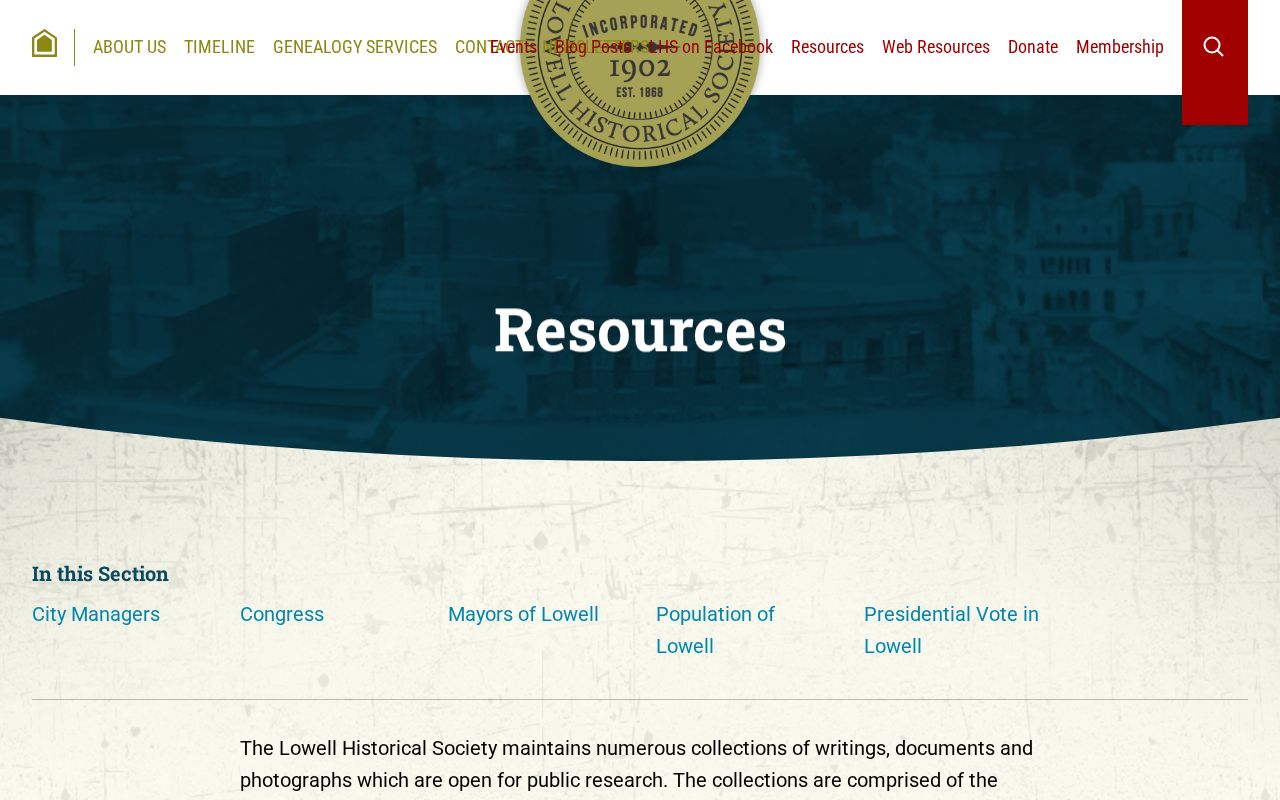
Use the archive catalog to choose a focused request, then compare the dated document with the directory volume and street spelling.
Note: A Sanborn sheet or archive reference adds context to a Lowell address, but it should be read with its date and source limits intact.